MTR joins forces to build the Northeast China land–sea corridor, forging a vital logistics artery.
Ports and railways are key carriers for building a modern logistics service network and strong support for high-quality regional economic development. How to provide better and more efficient logistics services for hinterland enterprises and help enhance the core competitiveness of regional industries is a common challenge faced by ports and railways.
Recently, the "Sailing Together, Creating the Future" Road-Port-Enterprise Integrated Logistics Conference, hosted by Liaoning Port Group and China Railway Shenyang Group (referred to as CR Shenyang Group), was held in Dalian. Representatives from over 30 leading enterprises in the fields of steel, petrochemicals, trade, and logistics gathered together with ports and railways to review the past, embrace the present, and plan for the future.
"Since the first Road-Port-Enterprise Integrated Logistics Conference, we have focused on the bottlenecks, pain points, and difficulties in our logistics chain, deeply explored personalized, differentiated, and integrated logistics needs, systematically planned, precisely deployed, and collaborated with local customers to jointly create efficient and high-quality service channels," said Li Guofeng, Party Secretary and CEO of Liaoning Port Group, at the conference.
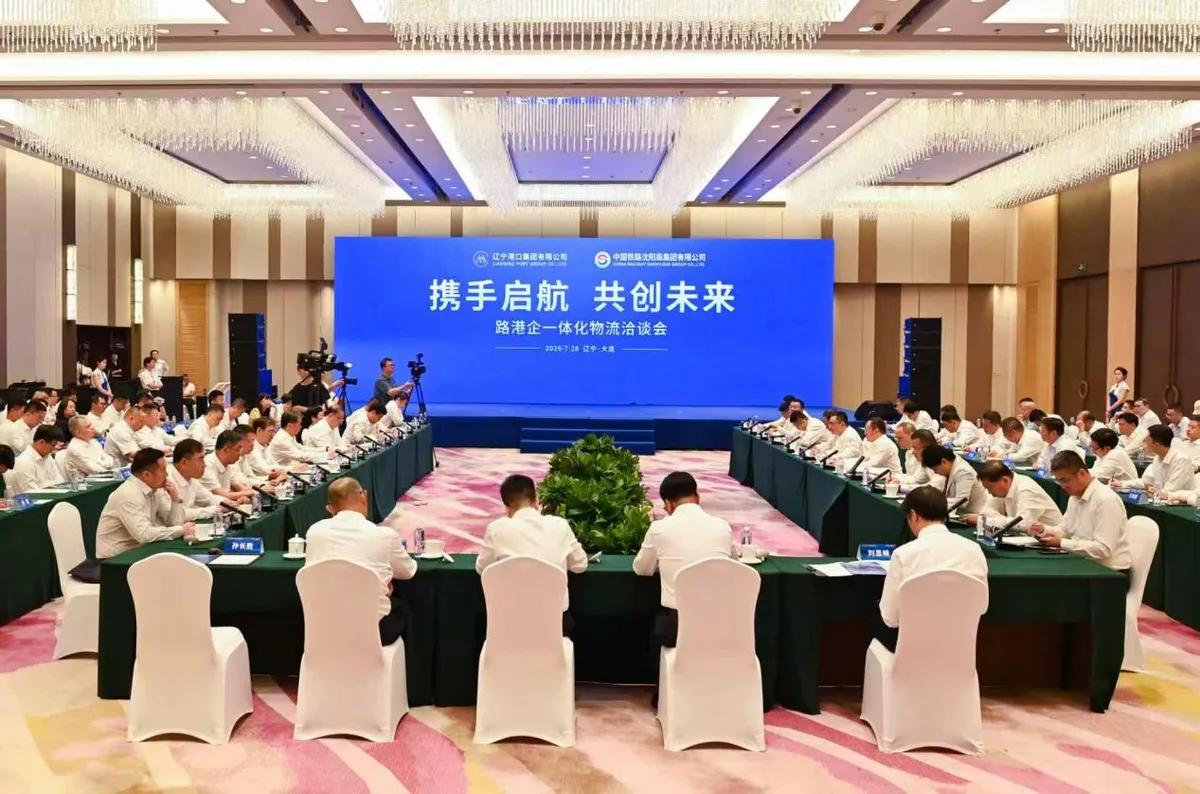
In November 2025, Liaoning Port Group and CR Shenyang Group held the first Road-Port-Enterprise Integrated Logistics Conference. At the conference, both parties determined several practical measures to accelerate the construction of a smooth and integrated end-to-end logistics system. Since the beginning of this year, Liaoning Port Group and CR Shenyang Group have continued to strengthen collaboration, optimize models, reduce costs, and promote development, enhancing the operational efficiency of the industrial chain and jointly building a stable, diverse, and robust logistics ecosystem.
Improving Collaborative Mechanisms to Build a "Bridge of Connection" for Road-Port Cooperation
On November 11, 2025, Liaoning Port and CR Shenyang Group jointly signed the "Road-Port Cadre Exchange Agreement," officially launching the two-way cadre exchange program. Over the past six months, both parties have completed the two-way exchange of 17 business backbones. Using the exchange as a link, they have continuously improved the collaborative communication network, promoted mutual assistance in business, shared information, and fostered cultural understanding, establishing a closer cooperative relationship.
"During my exchange period, I fully served as a bridge between the port and railway, proactively connecting railway transportation with port operations, and building an integrated understanding of sea-rail intermodal transport. My personal coordination skills have been comprehensively honed and improved. I will remember the core culture of Liaoning Port, 'Unity and Progress,' and transform this valuable experience into motivation for future work," said Qu Lin, Deputy Section Chief of the Dispatch Command Center at Dalian Railway Logistics Center.
To further promote the transformation of mechanism achievements, the two parties have also jointly established three special working groups for market development, operational support, and information interconnection. They have collaborated to sort out and identify 15 sources of incremental cargo information, innovatively created a "Port-Rail-Industry" tripartite collaboration model, and implemented customized logistics solutions for key enterprises in steel, energy, and grain, opening up the entire logistics chain of the industrial chain.
"I systematically studied railway freight regulations and operational mechanisms, learned the formulation, calculation process, and policy basis of the railway 'one-price' policy, and actively participated in the entire process of cargo source development and project tracking," said Kong Yang, Port Relations Specialist at the Logistics Center of Liaoning Port Co., Ltd. Through this cross-functional role, I successfully transitioned from a single port business perspective to a systematic understanding of the overall operation of railway freight. I will focus on the port-rail connection point to promote deeper collaboration in project development, freight rate alignment, and production scheduling between the two parties.
Meeting Industry Needs to Smooth the "Expressway" of Sea-Rail Intermodal Transport
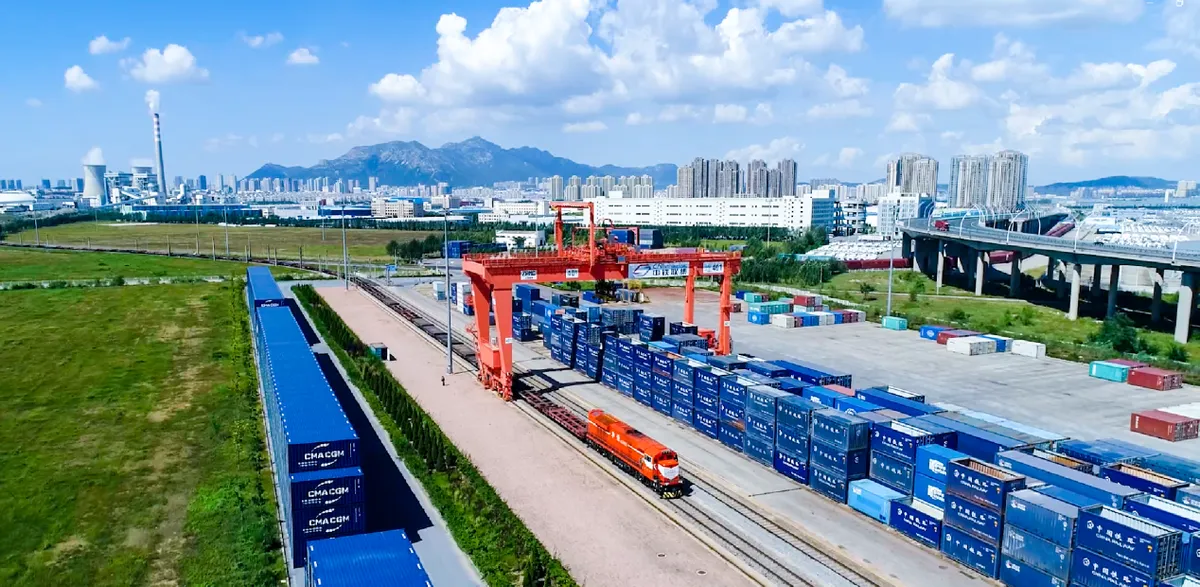
Sea-rail intermodal transport, as the "golden link" connecting land and sea transportation, organically integrates the stability of railway transport with the high capacity of maritime transport, offering high efficiency and low cost. Focusing on key links in container rail transport to and from ports, Liaoning Port Group has targeted seven key hinterland regions, including Shenyang, Fuxin, Changchun, Tonghua, Tongliao, Chifeng, and Daqing. They have systematically advanced the construction of nine typical logistics corridors and cultivated ten benchmark demonstration routes, fully establishing a new "7+9+10" high-quality logistics corridor network.
In the first half of this year, Liaoning Port Group, in collaboration with CR Shenyang Group, continued to develop a diversified matrix of train services. A total of 58 rail-sea express lines operated steadily across the region, with 10 new train routes added. The large-scale operation of the lignite outbound corridor in eastern Inner Mongolia resulted in a cumulative port throughput of 4 million tons, effectively advancing the transition from road to rail and bulk to containerized transport.
Meanwhile, focusing on the industrial characteristics of the hinterland of the core port areas in Dalian and Yingkou, Liaoning Port Group has tailored distinctive business growth poles to local conditions. Dalian Port's Jifa Logistics Company has used corridor construction as a starting point to improve the integrated service system of "shipping routes + ports + trains + inland stations." The frequency of the "Shenyang-Dalian" intercity train has increased from three to five times per week, with the total transit time compressed to less than nine hours, establishing a stable and efficient intermodal corridor between the province's two major growth engines. The "Chifeng-Dalian" corridor has grown from scratch, completing over 1,800 TEUs in the first half of the year. The "Daqing-Dalian" corridor has intensified efforts to shift from road to rail, with a 21% year-on-year increase in volume during the first half of the year. Yingkou Port Tong Company has been fully promoting the construction of five inland corridors, including Shenyang, Tonghua, Fuxin, Tongliao, and Changchun. They have upgraded the "Bayuquan-Xinxiangfang" scheduled rail-sea express line, forming stable and efficient operational capabilities. Additionally, they have implemented key sea-rail intermodal projects for goods such as grain, board materials, and silica sand, optimizing both the cargo structure and network coverage simultaneously.
Breaking Information Barriers to Cultivate a "Accelerator" for Digital Transformation
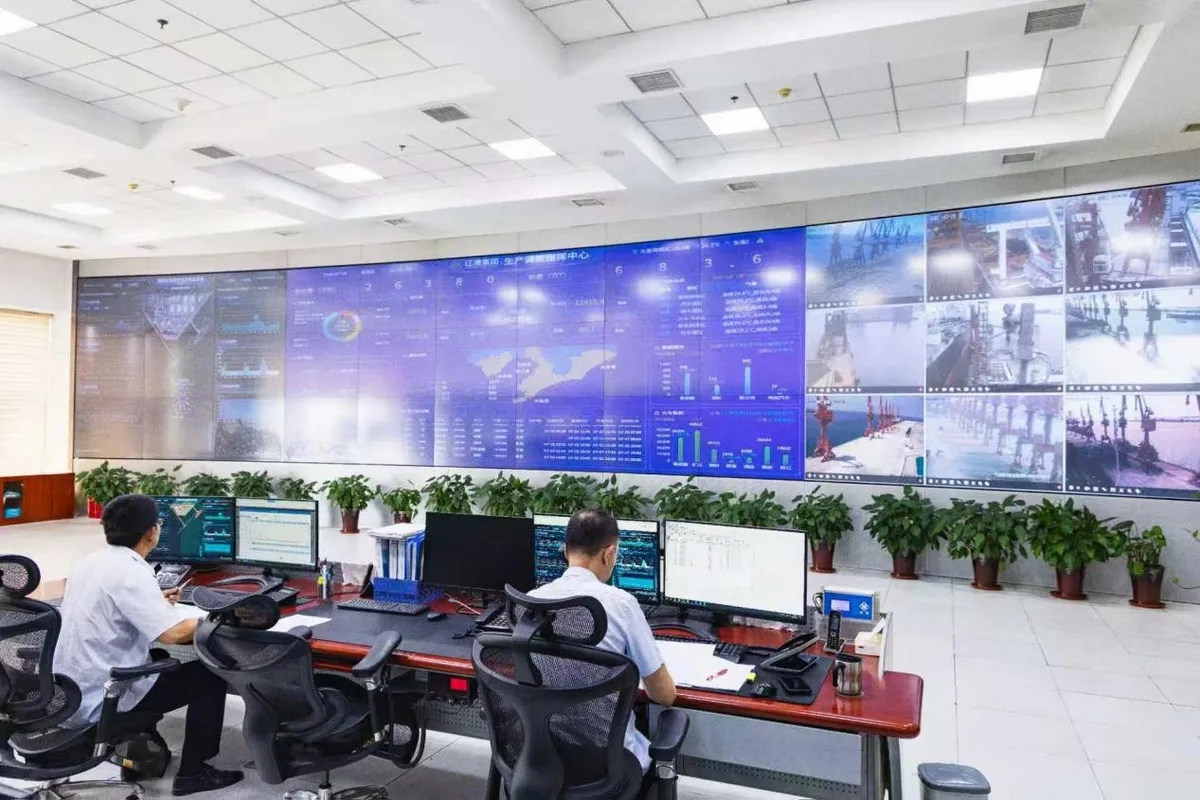
In May this year, Liaoning Port Group and CR Shenyang Group officially signed the "Logistics Data Sharing Agreement." Since the signing, both parties have focused on promoting the real-time sharing of core information, such as the dynamic status of railway vehicles in transit during port collection and distribution, vehicles stored at port stations, cargo waybills, and port ship forecasts/confirmations, as well as port-rail operation plans.
To date, the two parties have connected 30 data interfaces and 18 production operation information items. The port side can now obtain train information in advance, coordinate resources such as equipment, manpower, and storage capacity, optimize transportation scheduling, and improve the turnover efficiency of railway vehicles and port operations. Based on real and complete railway operation data, they can also provide support for effectively enhancing operational management decisions.
At the same time, focusing on the needs of core enterprises, Liaoning Port has simultaneously integrated the "Liao Zhitong" system with Ansteel's "Third-Party Logistics Collaboration Platform," launching eight major business modules, including steel rail-port collection and raw material unloading. They have achieved online truck reservations, automatic gate clearance, and reduced on-site operation time per vehicle by 15 minutes, realizing "zero manual input, zero waiting, zero duplication."
"The integration and upgrade of port-enterprise information systems now automatically push information to the port integration platform, completely eliminating offline documents and manual secondary input. The operation time per vehicle has been shortened by about 15 minutes, and the risk of manual input errors has been eliminated," said Qiao Lifeng, General Manager of the Logistics Management Department of Anshan Iron and Steel Group Co., Ltd. Since the information integration, the waiting time for trucks at the port has been reduced by more than two hours, the efficiency of steel loading at external port warehouses has increased by 20%, and overall operational efficiency has improved by over 10%, truly achieving efficient business flow driven by data flow.
Expanding Service Boundaries to Play the "Symphony" of Northward Opening
In recent years, with the in-depth advancement of international logistics corridor construction and the rapid development of multimodal transport, international dry ports have become inland extensions of coastal port logistics elements, playing an increasingly important role in promoting regional coordinated development and high-level opening-up.
Since the beginning of this year, relying on CR Shenyang Group's comprehensive railway freight system, Liaoning Port Group has accelerated the construction of international dry ports by focusing on building a "dry port + railway train + hub port + ocean route" global logistics network. In the first half of the year, they unveiled the Chifeng and Tongliao international dry ports and simultaneously established regional customer service centers, further improving the construction of the "Eight Centers, Twenty Outlets" service system. This has significantly enhanced the response efficiency to logistics dynamics in the western Liaoning and eastern Inner Mongolia regions, effectively addressing logistics bottlenecks in these areas. Domestically, it has facilitated the internal circulation in Northeast China, while externally, it has connected the Russia-Mongolia and Eurasian land-sea corridors.
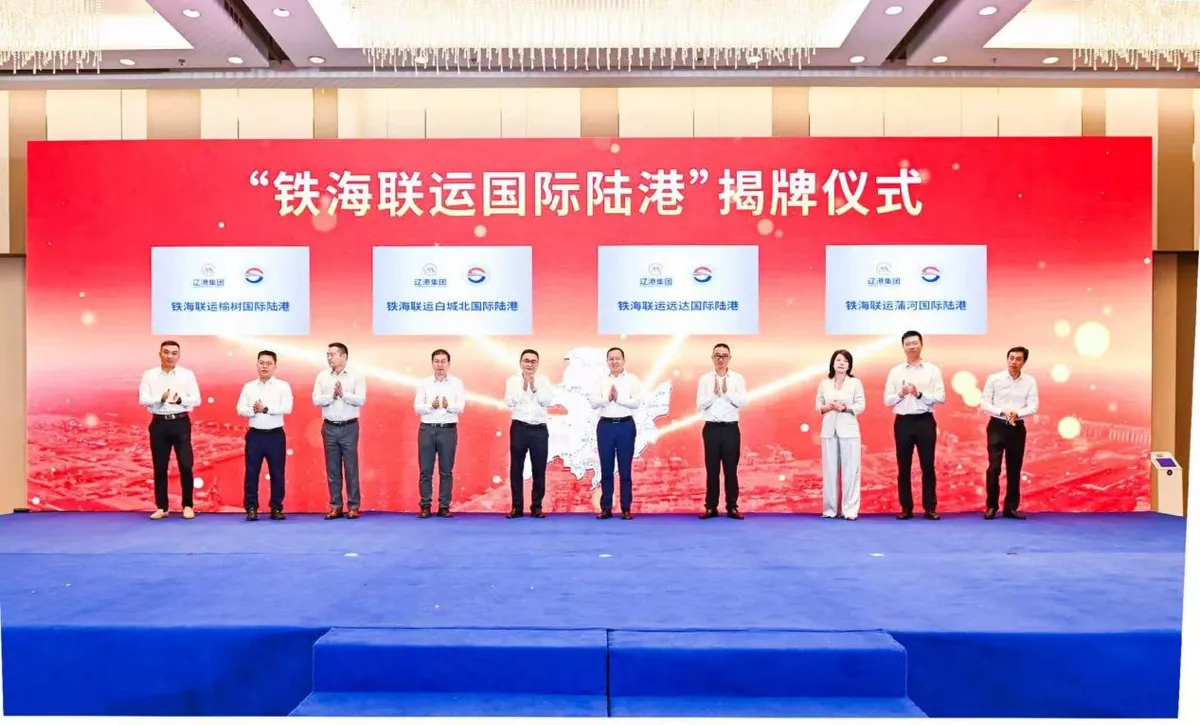
At the Road-Port-Enterprise Integrated Logistics Conference, Liaoning Port Group unveiled four additional international dry ports for rail-sea intermodal transport: Puhe, Yuanda, Baicheng North, and Yushu. This not only reflects the strong development momentum of the three northeastern provinces and one region at this stage but also demonstrates Liaoning Port Group's commitment to serving local economic development. Since the beginning of the year, Liaoning Port has advanced the inland extension of port functions and services through the establishment of dry ports, creating a "second port area" at the doorstep of enterprises. This not only provides more convenient maritime access for enterprises in the northeastern hinterland but also effectively enhances the connection between Liaoning Port and customers, as well as the industrial development of the three northeastern provinces and one region. It builds a "comprehensive coverage, highly efficient collaboration, and rapid response" hinterland service network, achieving synchronized resonance and mutual benefits between port enterprises and local economic development.
Upgrading Logistics Models to Build a "Win-Win Ecosystem"
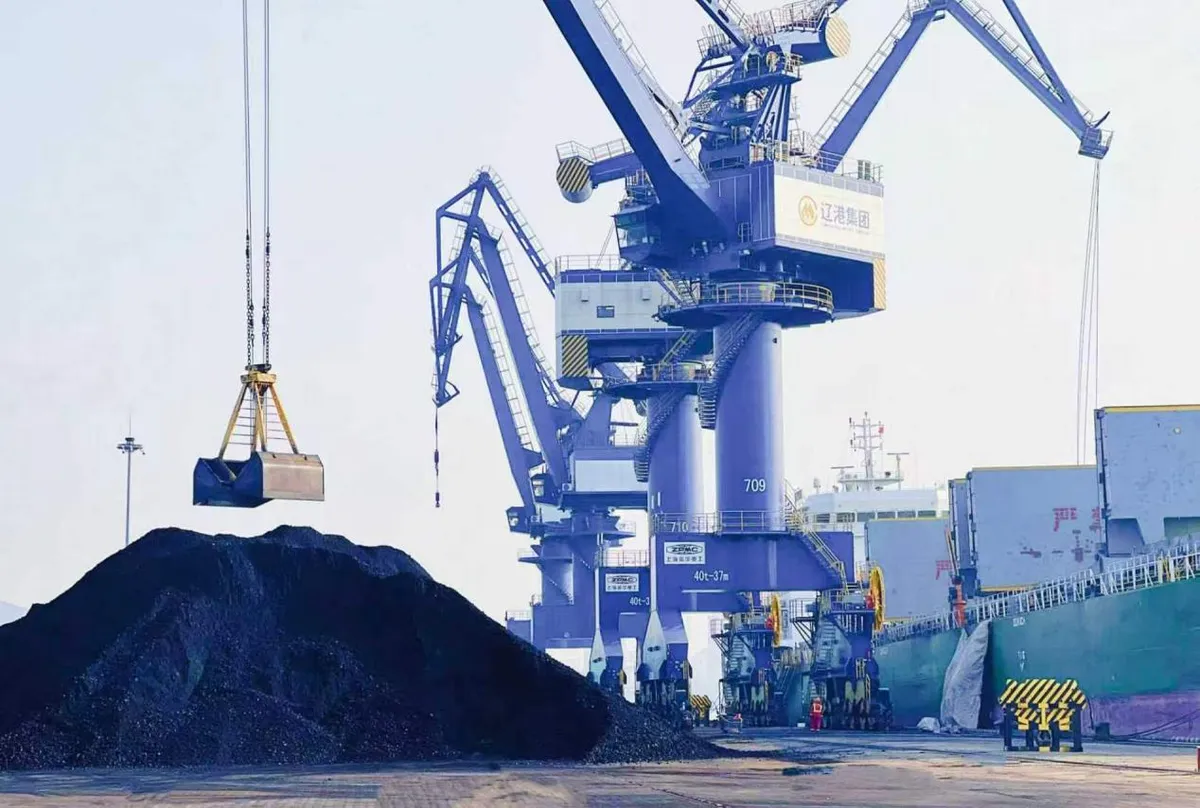
On May 18, the Bulk Cargo Terminal Branch of Dalian Port completed the unloading operation of a coal train originating from Holingol, officially launching the Mongolian Eastern Coal Transshipment Project in Dalian Bay Port Area. Currently, Liaoning Port Group, in collaboration with CR Shenyang Group, has fully carried out the Mongolian Eastern Coal waterway transportation business at four ports: Dalian, Yingkou, Panjin, and Dandong. The volume of Mongolian coal transported by sea has exceeded 1.9 million tons, providing strong support for coal as the cornerstone of China's primary energy amidst the fluctuating international energy landscape.
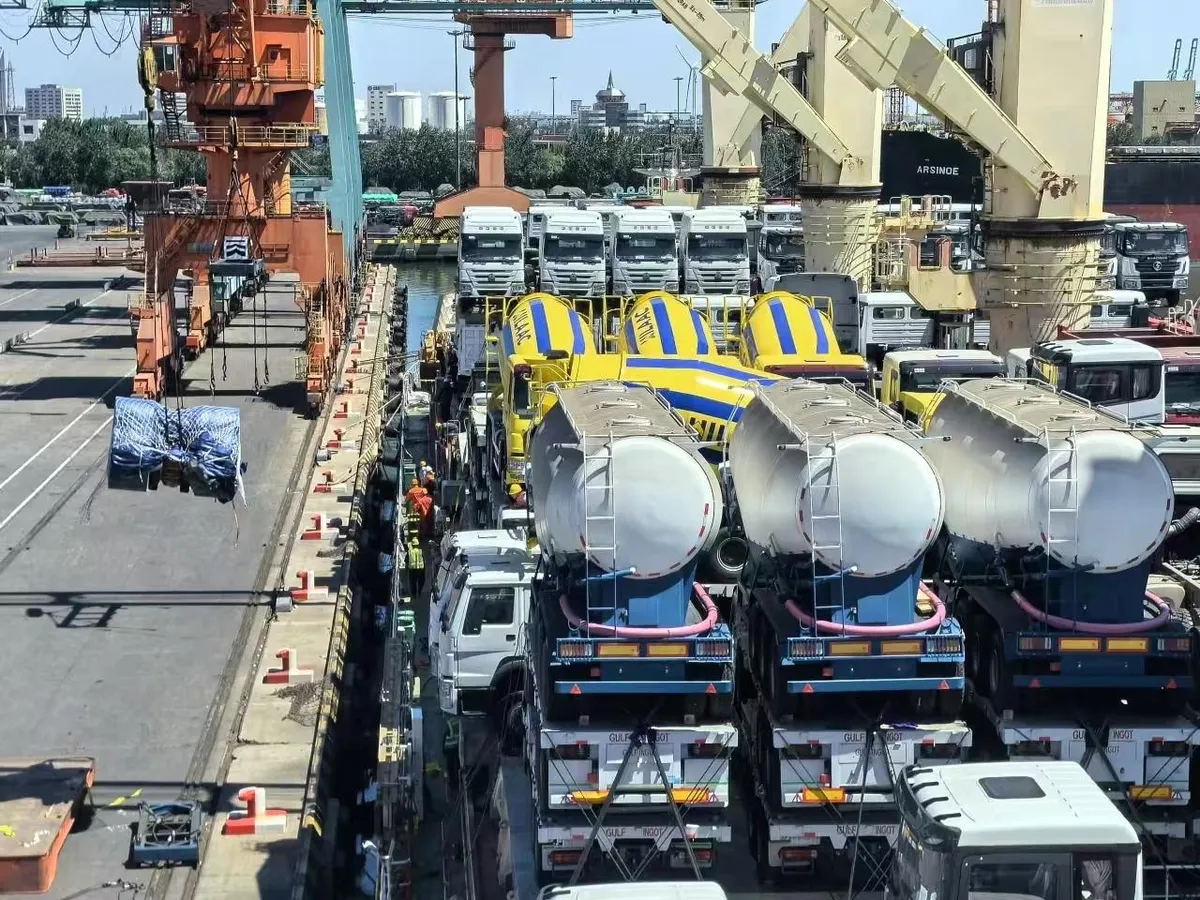
On July 21, the "Kanghuan" vessel, which had successfully completed the loading of 25,000 tons of steel and 18 engineering vehicles, slowly departed from the Sixth Company of Yingkou Port. As a strong measure by Liaoning Port to help customers reduce maritime transport costs, the "steel + equipment" combined shipping business not only effectively addresses the issues of tight shipping schedules and high maritime freight rates for steel companies but also provides more diversified export channels for hinterland automobile and equipment manufacturing enterprises. To date, this business has completed 23 voyages, handling nearly 100,000 tons of cargo throughput.
To further reduce logistics costs and continue promoting the transition of bulk goods from road to rail and road to water, Liaoning Port and CR Shenyang Group have deeply explored the advantages of wide-body containers and small high containers for large-scale operations. They have introduced bidirectional circular transportation for steel-mineral, mineral-grain, and fertilizer-grain, fully implemented the "one-ticket system" for multimodal transport, and reduced transshipment losses. They have also jointly introduced preferential commercial rate policies, saving enterprises nearly 2 billion yuan in the first half of the year.
-
Guarding the Yangtze River's safety, benefiting the livelihood of riverside residents—Anqing Port Maritime Office weaves a dense safety net for the Anqing section of the Yangtze River.3838
-
A thousand sails head to sea, Lianyungang Maritime ensures safe navigation for the full opening of the fishing season.3275
-
The Dalian Port Lightship Returns to Duty in "Stylish Attire"3374
-
Let the treasures of the grasslands reach across rivers and seas.5008
-
The East China Sea Second Rescue Flying Team of the Ministry of Transport has released an “AI” action plan.3345