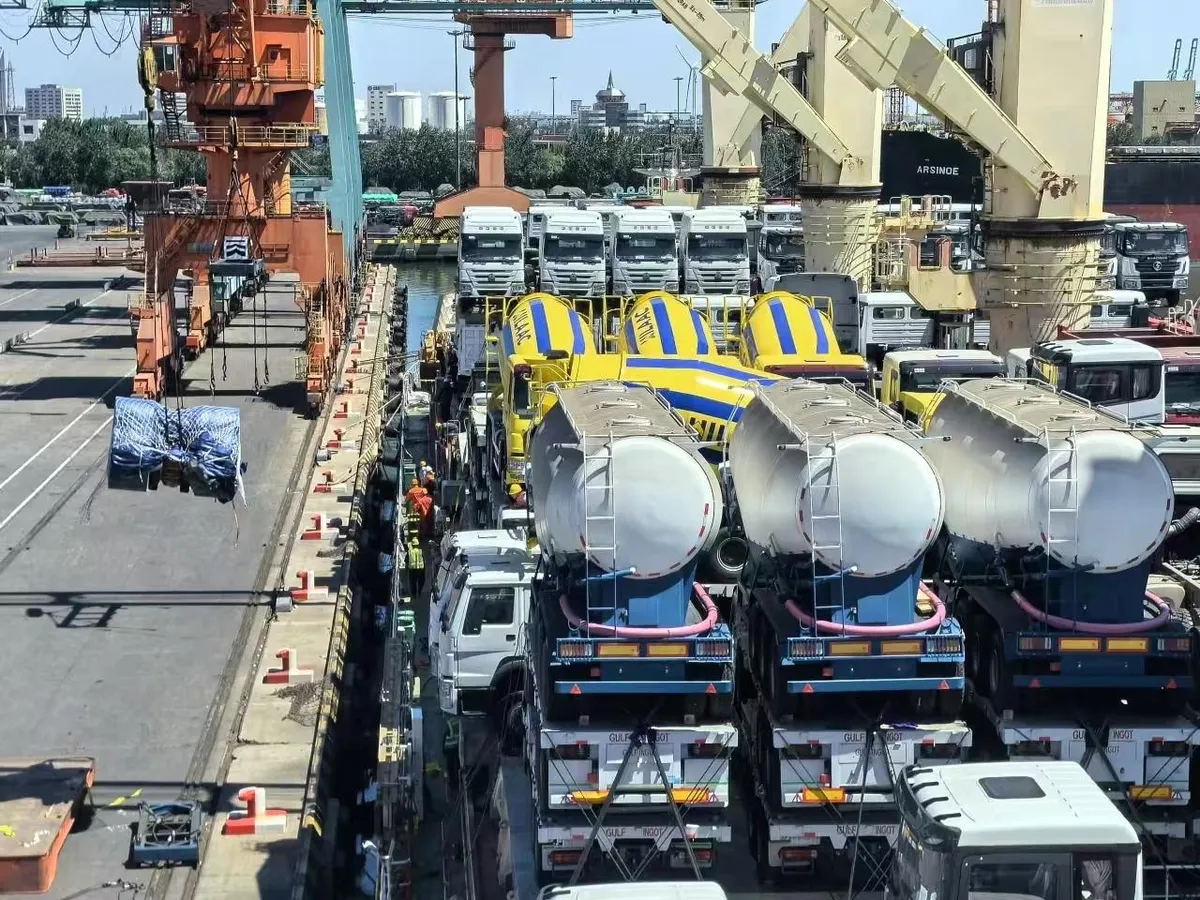
Guangxi is leveraging the Pinglu Canal to build an integrated intermodal transport system, ensuring that the river remains navigable, vessels are in operation, and cargo is flowing.
The reporter learned from the transportation work symposium of the Guangxi Zhuang Autonomous Region for the first half of 2026 that this year, the region's transportation system has closely followed the overall layout of "one axis leading, two wings interacting, land-sea coordination, and full-region maritime orientation," steadily advancing various key tasks, with major indicators better than expected. In the second half of the year, efforts will be made to ensure the Pinglu Canal is navigable as scheduled, accelerate the full-scale construction of seven expressways including Pingzheng to Yulin, fully launch the construction of all-region tourism roads, and strive to start over 2,000 kilometers of tourism roads within the year.
Since the beginning of this year, Guangxi has been making every effort to ensure the Pinglu Canal is completed and navigable. The channel, ship locks, and bridge projects have all been completed, the Pinglu Canal Management Center has been officially launched, and the "Pinglu Canal 2026–2027 Annual Navigation Water Supply Guarantee Plan" has been issued and implemented. Over 2,000 compatible inland river vessels in the region can now navigate to Qinzhou Bay via the Pinglu Canal, with 463 canal route vessels already registered. Approximately 3,000 coastal sea vessels under 2,000 tons nationwide meet the canal navigation conditions, and potential cargo sources exceeding 5 million tons for this year have been preliminarily identified. Simultaneously, related "policy guidance" measures are being revised to accelerate the construction of an intermodal transport system centered on the Pinglu Canal, ensuring "water in the river, ships on the water, and cargo in the ships."
The intermodal transport organization system centered on the Pinglu Canal, the efficient international logistics system oriented towards ASEAN, and the cross-border multimodal transport system at the western starting point of the New Western Land-Sea Corridor are being rapidly improved. Guangxi is advancing the high-level construction of the New Western Land-Sea Corridor, with preliminary work on four projects, including the second line addition for the Nanning to Qinzhou section of the Nanfang Railway, progressing steadily. The entire Guangxi section of the second line addition for the Qian-Gui Railway has started construction. Preliminary work on the Zhaoping to Pingnan expressway project is accelerating, and projects such as the reconstruction and expansion of the Nanning to Baise section of the Guangzhou-Kunming Expressway are advancing rapidly. Construction has begun on the Guigang Port Guiping Port Area Mu Gui Berths 3 to 5 project, and the 12th and 13th berths at the Dalinping Port Area of Qinzhou Port have been completed.
Transportation logistics costs are being reduced while quality and efficiency are being improved. Guangxi is actively promoting the "comprehensive transportation + new energy" pilot for large-scale transportation, with the Guigang–Yulin wind power and Nanning–Qinzhou energy storage battery pilot routes cumulatively transporting over 1,700 vehicles. The level of road transport facilitation continues to improve, with the first launch of the Guangxi-Guangdong-Hong Kong "cross-border one-lock" system, saving an average of about 8 hours of transport time and reducing comprehensive transport costs by 25%. The integration of rural passenger, freight, and postal services has been expanded and improved, with 1,457 county-town-village comprehensive service stations built and 301 cooperative routes opened. Several cities and counties have piloted nearly 300 unmanned delivery vehicles for last-mile delivery, reducing single-trip delivery costs by 30% to 60%.
New quality productivity is the focus of high-quality development. In the first half of the year, Guangxi's intelligent logistics vehicle analysis platform was officially completed and put into operation, and the Guangxi Transportation "Logistics + Mobility" comprehensive empowerment platform project was successfully launched. Agreements were signed for the deployment of 726 express charging facilities at highway service areas, with 405 new charging piles installed and 46 heavy-duty truck energy replenishment stations built. There are 83 inland LNG-powered operational vessels, 67 under construction, and 15 new clean energy-powered vessels. The usage of shore power at ports reached 7.3878 million kilowatt-hours, and the construction of green ports, green waterways, and green highways is progressing simultaneously.
-
Guarding the Yangtze River's safety, benefiting the livelihood of riverside residents—Anqing Port Maritime Office weaves a dense safety net for the Anqing section of the Yangtze River.3838
-
A thousand sails head to sea, Lianyungang Maritime ensures safe navigation for the full opening of the fishing season.3275
-
The Dalian Port Lightship Returns to Duty in "Stylish Attire"3374
-
Let the treasures of the grasslands reach across rivers and seas.5008
-
The East China Sea Second Rescue Flying Team of the Ministry of Transport has released an “AI” action plan.3345