
Indian Black Tiger Shrimp Accelerates China Market Expansion, Prices Decline with Increased Supply(Nov 3)
Indian Black Tiger Shrimp Accelerates China Market Expansion, Prices Decline with Increased Supply
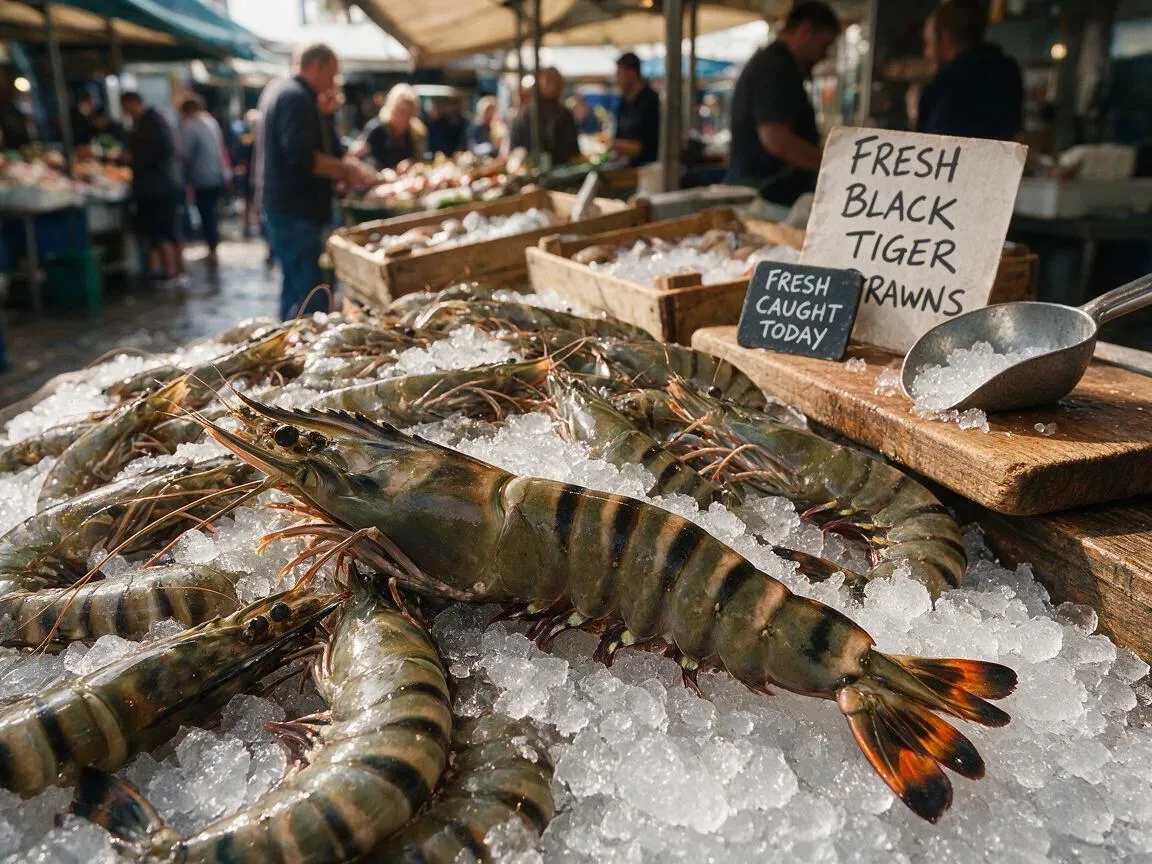
At the India pavilion of this year's Qingdao Fisheries Expo, black tiger shrimp became the key product promoted by multiple exhibitors. Shivam Gupta, General Manager of West Coast Frozen Foods, headquartered in Gujarat, noted that black tiger shrimp was previously a niche product in Gujarat, but now more and more processing companies are entering this market, and India's main production area of Andhra Pradesh is also farming black tiger shrimp.
Price Trends: Decline Driven by Supply Growth
Regarding Chinese market prices, Gupta stated that black tiger shrimp prices in China have indeed declined. The reason is that more processing companies see the demand in the Chinese market, and products entering China this year are significantly more than last year. The price decline is entirely driven by increased supply.
Many Indian companies are primarily promoting salt-frozen head-on black tiger shrimp. Gupta explained that saltwater quick-freezing equipment was previously not widespread in India. Two years ago, there were only about 5 units across the country, but this year the number has increased to approximately 12. Salt-frozen head-on black tiger shrimp uses a saltwater ice glaze during freezing to lock in shrimp quality, and after thawing, the texture is closer to live shrimp, making it suitable for direct cooking in Chinese cuisine.
Gupta believes the Chinese black tiger shrimp market is maturing. He stated that the extreme price swings of the past have become less common. Although average prices are lower than before, price volatility has become more stable.
Black Tiger Shrimp vs. White Shrimp: Positioning and Drivers
Black tiger shrimp and white shrimp (vannamei) are India's two main farmed shrimp species. Black tiger shrimp are larger individually with firmer texture, and prices are typically 30% to 40% higher than white shrimp, with stable demand in high-end dining and specific retail channels. Indian farmers are shifting to black tiger shrimp partly because white shrimp farming success rates have declined in high-salinity areas, and partly to avoid US anti-dumping duties on white shrimp.
The expansion of Indian black tiger shrimp is nationwide. Industry farmer Manoj Sharma previously told media that India's black tiger shrimp (Monodon) production in 2026 may double, rising from over 60,000 tons in previous years to 120,000-150,000 tons. Combined with white shrimp production, India's total annual shrimp production is expected to exceed 1 million tons.
Export Data: Growth Accelerating
India's overall seafood exports continue to grow. According to the Marine Products Export Development Authority (MPEDA), in fiscal year 2025-26, India's seafood exports reached 1.972 million tons valued at USD 8.46 billion, up 16.13% and 18.4% year-on-year respectively. Frozen shrimp exports were 792,600 tons valued at USD 5.62 billion, accounting for two-thirds of seafood export value.
Export data confirms the surge in black tiger shrimp. In fiscal year 2025-26, Indian black tiger shrimp export value reached USD 568.31 million, up 38.14% year-on-year, with export volume up 40.06%, clearly outpacing white shrimp growth. China and the EU are the largest markets.
China is one of the core markets for Indian black tiger shrimp. After entering China, black tiger shrimp is primarily used in high-end dining, hotels, and e-commerce retail channels. Salt-frozen head-on whole shrimp can be cooked directly, with specifications mainly in larger sizes such as 16/20 and 21/25, differentiating from the smaller sizes of white shrimp.
Equipment expansion and order growth reinforce each other. Two years ago, there were only about 5 saltwater quick-freezing units in India; now the number has doubled to approximately 12. Gupta believes this change directly serves the Chinese market's demand for salt-frozen head-on shrimp, with the processing side expanding capacity for Chinese orders.
Gupta emphasized that the Chinese black tiger shrimp market has not seen the extreme price swings of the past, and price volatility has stabilized. Indian processing companies view China as the primary market to absorb new production capacity, and the price decline brought by increased supply provides a window for black tiger shrimp to expand its China market share.
-
Indian Black Tiger Shrimp Accelerates China Market Expansion, Prices Decline with Increased Supply(Nov 3)6527
-
New Zealand Apples: Exports to China Exceed 90,000 Tons, New Season Exports May Reach 410,000 Tons(Nov 3)5944
-
Egg: Price Rebounds, Beware of a Flash in the Pan(Nov 2)5462
-
Norway's Largest Farmed Cod Producer Ode Debuts at Qingdao Fisheries Expo, Targets 20% of Cod Sales to China by 2030(Nov 2)9447
-
Chilean Cherries Enjoy Fast-Track Preferential Import via Hong Kong-Zhuhai-Macao Bridge(Nov 2)5650