
Egg Weekly: Upward Channel Opens!
I. Domestic Egg Market Analysis
1.1 Egg Market Price Analysis
This week, the domestic egg market continued the upward trend from the end of last week. As of Thursday, the average red-egg price was 4.78 RMB/jin, the average pink-egg price was 4.91 RMB/jin, with a price spread of 0.13 RMB/jin, showing a narrowing trend in the red-pink egg price gap.
At this stage, newly opened laying hens are gradually increasing, and the supply-side tension is easing. However, high temperatures persist and the recovery in production rates remains relatively small. Moreover, under high-temperature conditions, egg storage cycles are short, traders are cautious in purchasing, inventory across all segments remains low, large-grade eggs move smoothly, while small-grade eggs are increasing in volume and moving more slowly.
From the downstream demand perspective, with the Mid-Autumn Festival approaching and schools stocking up, there is strong market consensus on future egg price increases. Purchasing enthusiasm across all segments has increased, market trading is smooth, further supporting steady egg price increases.
Production Areas: As of Thursday, the average egg price in major production areas was 4.79 RMB/jin, up 0.35 RMB/jin from last Thursday.
Consumption Areas: As of Thursday, the average egg price in major consumption areas was 4.69 RMB/jin, up 0.29 RMB/jin from last Thursday.
1.2 Egg Market Price Trend Charts
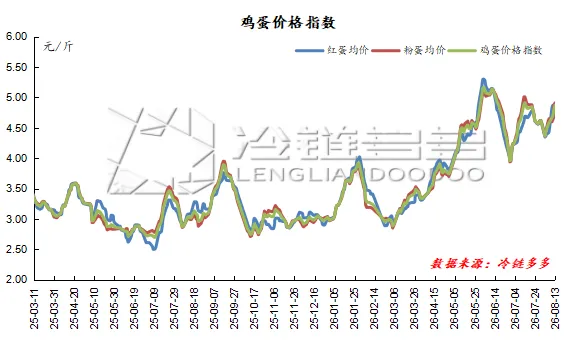
Figure 1: Egg Price Index Trend (Red Egg Avg, Pink Egg Avg, Egg Price Index)
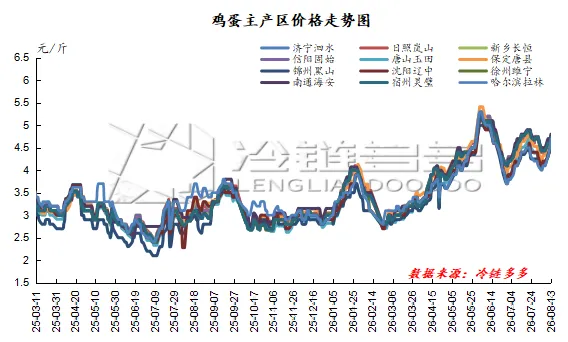
Figure 2: Egg Price Trend in Major Production Areas
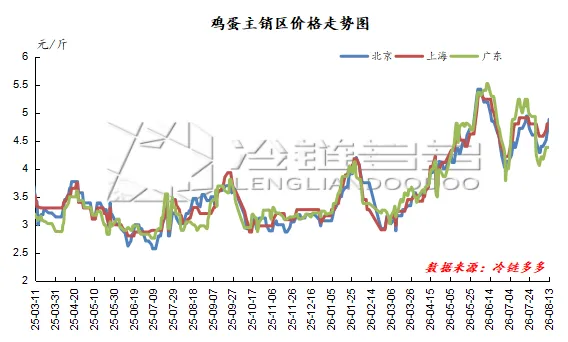
Figure 3: Egg Price Trend in Major Consumption Areas
1.3 Regional Egg Market Price Comparison This Week
Weekly Egg Market Price Comparison (Unit: RMB/jin)
|
Region |
Market |
Aug 13 |
Aug 6 |
Change |
Remarks |
|
East China |
Nantong Hai'an |
4.80 |
4.50 |
0.30 |
Basket-delivered farm price |
|
East China |
Dezhou Ningjin |
4.63 |
4.27 |
0.36 |
Basket-delivered farm price |
|
East China |
Suzhou Lingbi |
4.73 |
4.43 |
0.30 |
Basket-delivered farm price |
|
East China |
Xuzhou Suining |
4.77 |
4.43 |
0.34 |
Basket-delivered farm price |
|
East China |
Rizhao Lanshan |
4.75 |
4.40 |
0.35 |
Basket-delivered farm price |
|
East China |
Jining Sishui |
4.75 |
4.40 |
0.35 |
Basket-delivered farm price |
|
Central China |
Hubei Xiantao |
4.91 |
4.60 |
0.31 |
Box-included station price |
|
Central China |
Hubei Xishui |
5.16 |
4.84 |
0.32 |
Box-included station price |
|
Central China |
Xinxiang Changyuan |
4.75 |
4.45 |
0.30 |
Basket-delivered farm price |
|
Central China |
Xinyang Gushi |
4.75 |
4.45 |
0.30 |
Basket-delivered farm price |
|
Northeast |
Harbin Lalin |
4.70 |
4.10 |
0.60 |
Basket-delivered farm price |
|
Northeast |
Changchun Dehui |
4.60 |
4.10 |
0.50 |
Basket-delivered farm price |
|
Northeast |
Jinzhou Heishan |
4.50 |
4.10 |
0.40 |
Box-delivered farm price |
|
Northeast |
Shenyang Liaozhong |
4.60 |
4.20 |
0.40 |
Basket-delivered farm price |
|
North China |
Shijiazhuang Xinji |
4.22 |
3.93 |
0.29 |
Basket-delivered farm price |
|
North China |
Baoding Tangxian |
4.71 |
4.33 |
0.38 |
Basket-delivered farm price |
|
North China |
Cangzhou Cangxian |
4.70 |
4.30 |
0.40 |
Basket-delivered farm price |
|
North China |
Handan Guantao |
4.44 |
4.13 |
0.31 |
Box-loaded tricycle |
|
North China |
Hengshui Raoyang |
4.22 |
3.93 |
0.29 |
Box-loaded station price |
|
Southwest |
Kunming Guandu |
5.33 |
5.11 |
0.22 |
Basket-delivered farm price |
|
Southwest |
Wenjiachang |
5.10 |
4.50 |
0.60 |
Net-weight station price |
II. Laying Hen Inventory and Slaughter Analysis
2.1 Inventory Analysis
This week, old hen inventory in the market remains at a low level. Recently, the egg market is gradually entering the seasonal peak season, and layer farming profits are acceptable. Large farms mostly proceed according to plan, but high temperatures persist, brooding difficulty remains high, and small and medium-sized farmers' restocking willingness is moderate.
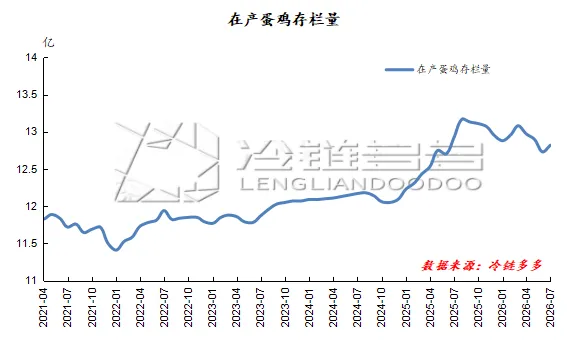
Figure 4: Laying Hen Inventory Trend
2.2 Slaughter Volume Analysis
This week, the growth rate of culled hen slaughter volume has slowed. Farmers' culling sentiment is mixed: some farmers, considering the approaching peak egg demand season and the continued upward trend in egg prices, are holding back and waiting; other enterprises are choosing to cull proactively to avoid concentrated culling around the Mid-Autumn Festival. Downstream, trading in live poultry and frozen products at agricultural markets is moderate, and slaughterhouses are procuring on-demand.
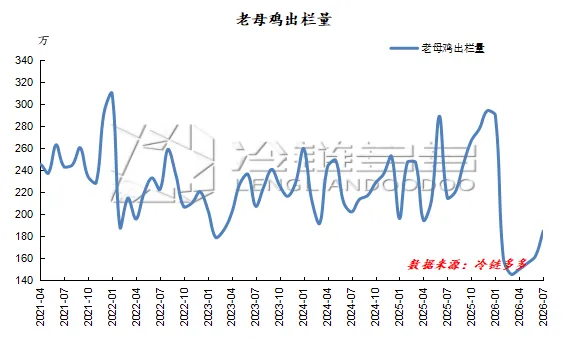
Figure 5: Culled Hen Slaughter Volume Trend
III. Egg Demand Analysis
This week, the egg demand side showed signs of improvement. Food factories' Mid-Autumn peak purchasing season has arrived as expected, but the market has not yet fully entered the purchasing peak. Combined with persistent high temperatures, the procurement model is mostly small-volume, on-demand purchasing, and the demand-driven force is relatively limited.
IV. Egg Market Outlook
Supply Side: A "polarization" pattern is emerging: on one hand, the number of newly laying hens continues to increase, supply of small and medium-grade eggs is ample, and short-term shipping pressure is difficult to absorb; on the other hand, the culling pace of old hens is accelerating, and supply of large-grade eggs is showing signs of tightness in some areas. Under supply-demand mismatch, the structural differentiation between large and small grades will persist in the short term.
Demand Side: Food enterprise procurement has increased month-over-month, but is mostly executing previous orders, with increments below expectations. Tourism and dining peak-season consumption remains stable, while supermarket and agricultural market terminal channels are moving flatly. Rising egg prices are boosting traders' purchasing willingness. Overall, current demand has some support, but has not yet shown significant volume expansion.
Overall Outlook: The pace of downstream volume expansion has not shown significant improvement, which to some extent constrains the room for egg price increases. However, short-term cost-side support remains favorable, and egg prices still have room for upward exploration. The adjustment range is estimated at approximately 0.15 RMB/jin, with the average production-area price projected at 4.70-4.85 RMB/jin.