
Egg Weekly: Prices Plunge Then Rise Again! What's Next for Egg Prices?
Domestic Egg Market Analysis
1.1 Egg Market Price Analysis
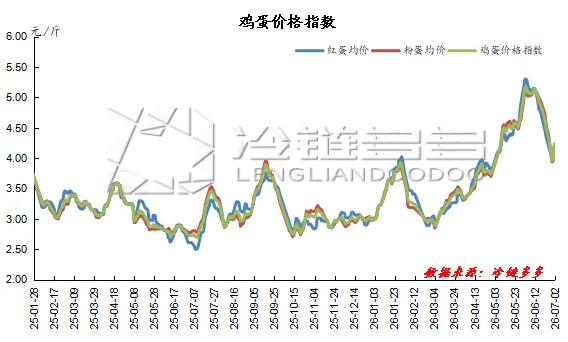
This week, the domestic spot egg market experienced a decline followed by a rise. As of Thursday, the average price of red eggs was 4.23 yuan/jin, and the average price of pink eggs was 4.24 yuan/jin, a price difference of 0.01 yuan/jin, a decrease of 0.1 yuan/jin compared to last Thursday.
In the first half of the week, egg prices continued the downward trend following the Dragon Boat Festival, with increased new laying hens and weak demand continuing to suppress prices. However, prices began to stabilize after the 30th, and prices generally rose in many areas after the start of July.
This was because after the previous sharp decline in egg prices, farmers were reluctant to sell at low prices, while traders and food processing companies believed that current prices were at a temporary bottom, increasing their willingness to replenish their stocks at lower prices, leading to a significant acceleration in market sales. However, the current rainy season makes storage difficult, and end-consumer demand has not yet emerged from the seasonal off-season; these factors still limit the extent of the rebound.

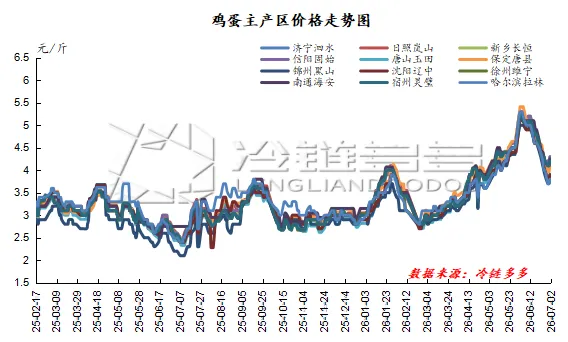
Production Area Market: On Thursday, the average price of eggs in major production areas was 4.23 yuan/jin, a decrease of 0.02 yuan/jin compared to last Thursday.
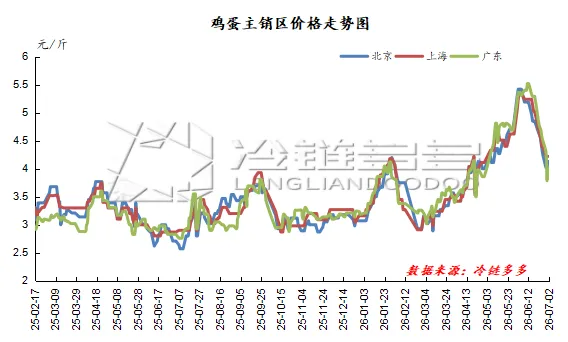
Sales Area Market: On Thursday, the average price of eggs in major sales areas was 4.34 yuan/jin, an increase of 0.08 yuan/jin compared to last Thursday.
1.2 Egg Market Price Trend Chart
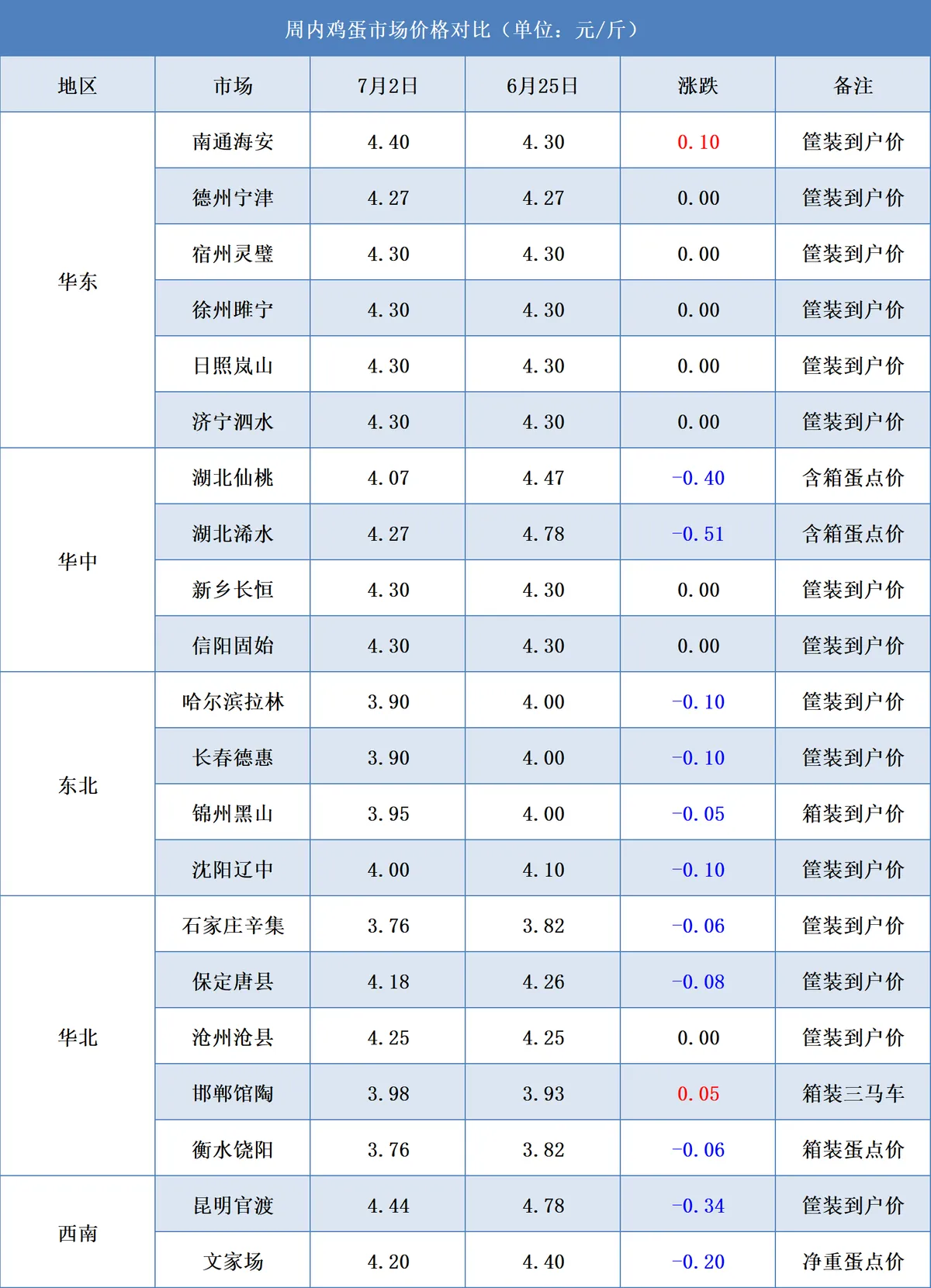
1.3 Comparison of Domestic Egg Regional Market Prices This Week
Analysis of Laying Hen Inventory and Slaughter
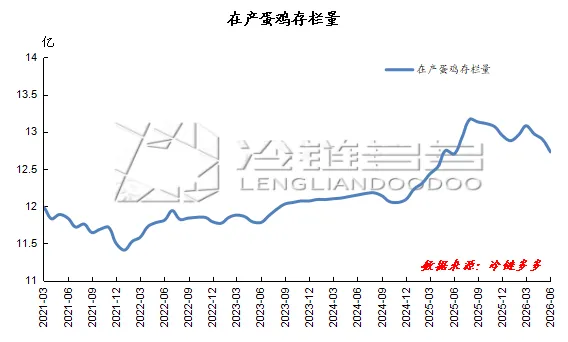
2.1 Inventory Analysis
The inventory of laying hens decreased slightly this week. However, due to the historically high level of restocking in the previous period, chicks will gradually enter the laying period in July. Coupled with the fact that the current high temperatures have not yet fully suppressed egg production, the overall market supply remains relatively ample.
While the inventory is low, there is no significant shortage. In summary, this week's inventory is in a tight balance state, with a slight decrease compared to the previous week and a slight increase year-on-year. The pressure on egg prices from the supply side has eased somewhat, but the increase in new laying hens still poses potential pressure.
2.2 Analysis of Culling Volume
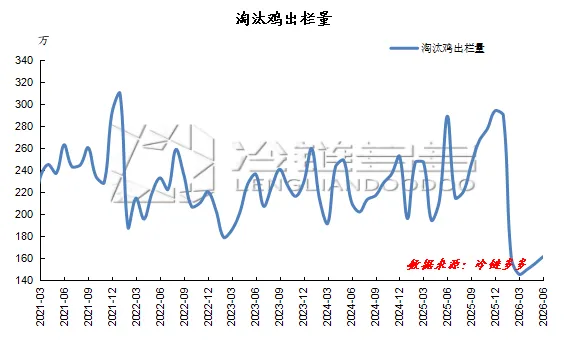
This week, the number of culled chickens slaughtered increased compared to the previous week, indicating a faster pace of culling at the farm level. Following the Dragon Boat Festival, egg prices continued to fall sharply, with the average price in major producing areas expected to drop below 4 yuan/jin by the end of June. Farmers' confidence in the market outlook weakened, and their reluctance to sell eased. Older chickens that had been delayed in culling due to high profits began to be slaughtered gradually.
However, the increase in the number of older chickens slaughtered this week played a positive role in alleviating short-term supply pressure. But due to the relatively high age of the slaughtered chickens and the overall relatively moderate culling pace, the supply-side contraction was limited, and the overall egg supply in the market remained relatively abundant.
Analysis of Egg Demand
This week, the egg market experienced a significant off-season. After the Dragon Boat Festival, bulk purchases by food processing companies and supermarkets declined sharply. School holidays led to a significant reduction in purchases through group catering channels. The terminal market mainly relied on residents' daily retail needs, resulting in a significant slowdown in overall sales.
However, entering the latter half of this week, as egg prices fell to a relatively low level, food processing companies began to replenish their inventories at lower prices, and distributors also engaged in some bargain hunting, providing some support to the demand side. However, end-consumer demand has not yet emerged from the seasonal off-season, and the overall improvement in demand is relatively limited.
Egg Market Outlook
From the supply side, the number of newly laying hens is still steadily increasing, but as the country enters the hottest period of summer in mid-to-late July, egg production will seasonally decline. This reduction will effectively offset the increase brought by new laying hens, gradually easing supply-side pressure.
From the demand side, the plum rain season in southern China has not yet ended in early July, making egg storage difficult. Traders are still mainly purchasing on demand and operating with low inventory levels. End-consumer demand is in its seasonal off-season, limiting the boost to egg prices from the demand side.
Overall, the egg market is expected to remain stable next week, with some differences in the performance of red and pink eggs. The price adjustment range is expected to be around 0.15 yuan/jin, with the average price in major producing areas at 4.15-4.3 yuan/jin.