Egg Weekly: Festival Demand Falls Flat, Egg Prices Under Pressure and Weak(Sep 3)
Egg Weekly: Festival Demand Falls Flat, Egg Prices Under Pressure and Weak

1. Domestic Egg Market Analysis
1.1 Egg Market Price Analysis
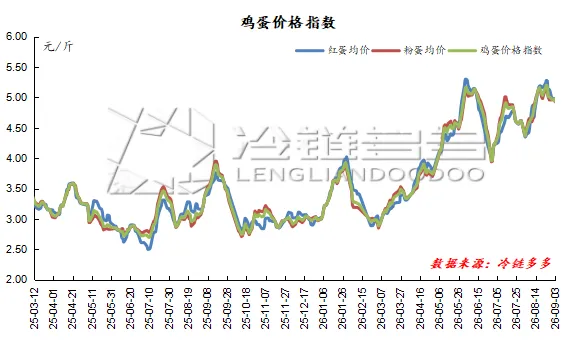
This week, domestic egg market quotations showed a declining trend. As of Thursday, the average price of red-shell eggs was 4.96 CNY/jin (0.5 kg), down 0.04 CNY/jin from last week; the average price of pink-shell eggs was 4.93 CNY/jin, down 0.09 CNY/jin from last week. Both red and pink egg prices declined to varying degrees, with a price spread of 0.03 CNY/jin between the two.
Egg prices overall maintained a weak state this week, and the market is currently in an intensifying long-short tug-of-war phase. Festival demand fell short of expectations, and acceptance of high-priced supplies across all links was generally limited, with market participants becoming cautious. Back-to-school stocking has largely concluded, concentrated procurement demand has faded, and the pace of shipments has noticeably slowed. Production areas lack new demand drivers, and the momentum for further price gains has weakened. In the short term, the market may continue its weak consolidation pattern, with attention needed on the actual fulfillment of festival stocking and changes in end-market acceptance.
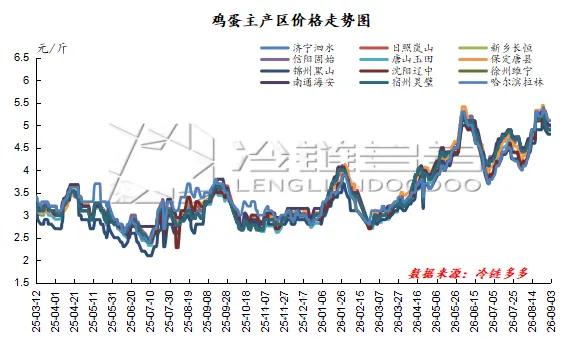
Production areas: As of Thursday, the average price in major egg-producing regions was 4.95 CNY/jin, down 0.22 CNY/jin from last Thursday.
Sales areas: As of Thursday, the average price in major egg-consuming regions was 4.93 CNY/jin, down 0.17 CNY/jin from last Thursday.
1.2 Egg Market Price Trend Charts
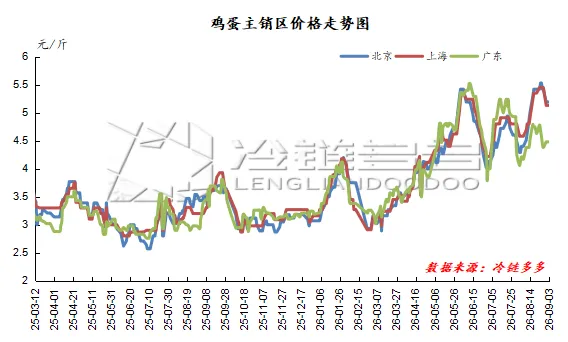
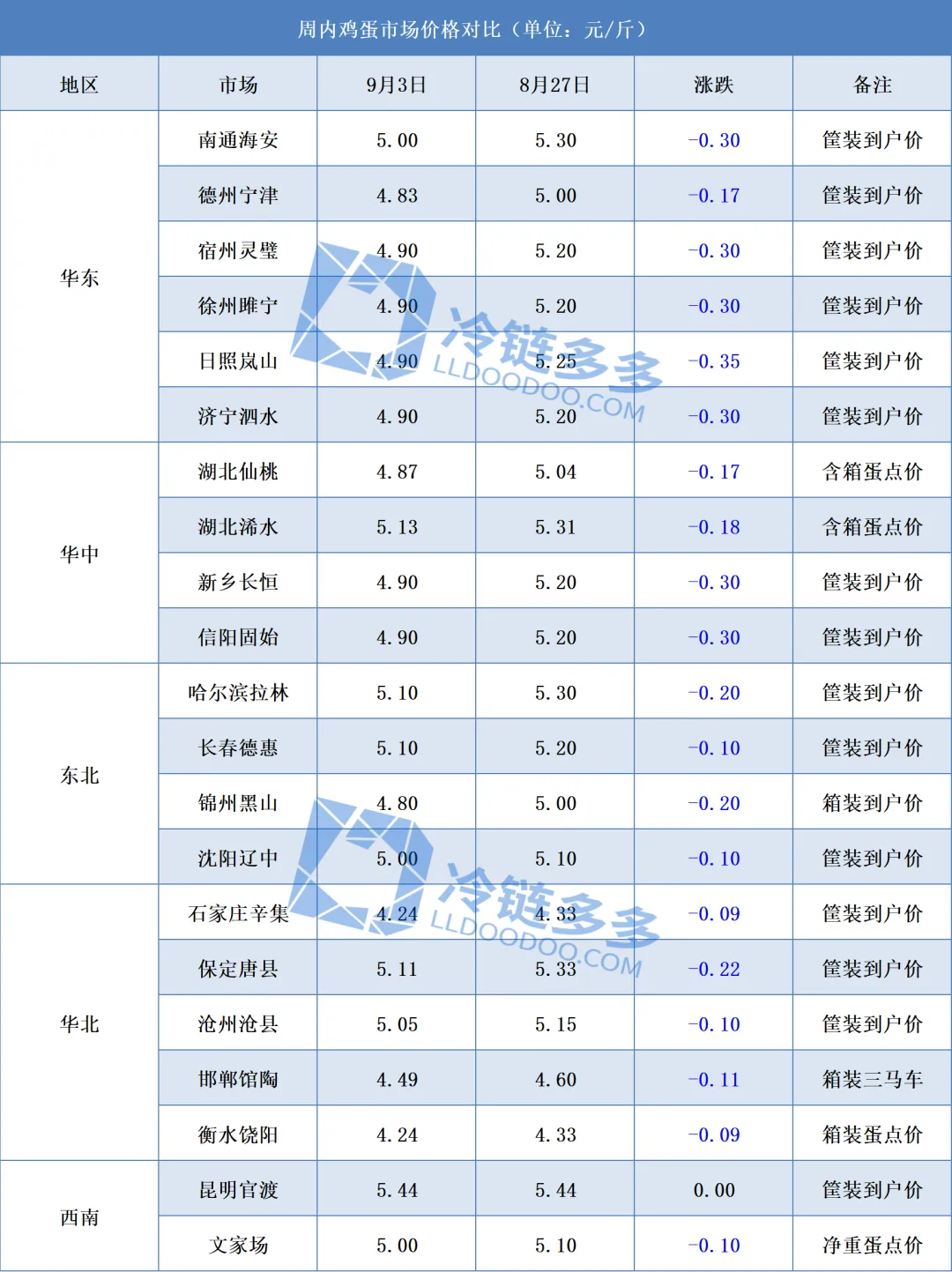
1.3 Regional Egg Market Price Comparison This Week
The following table shows the weekly egg market price comparison (unit: CNY/jin):
2. Layer Flock Inventory and Slaughter Analysis
2.1 Inventory Analysis
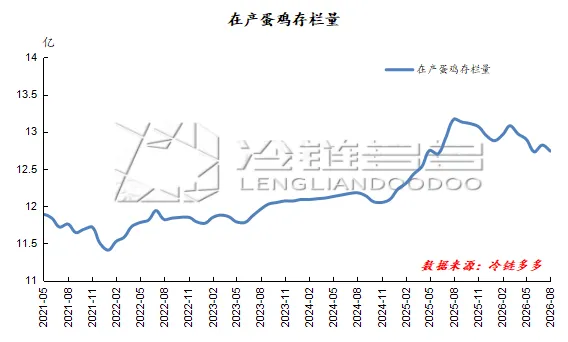
From the inventory structure perspective, the layer flock inventory remained at relatively high levels this week. Looking at the restocking transmission cycle, newly opened layers in September mainly correspond to chick restocking around May, while chicks restocked in April have largely entered the concentrated production phase. Moreover, April-May chick restocking volumes were at relatively high levels for the year, meaning that newly opened layers are now seeing a wave of concentrated production growth, and the supply side will see significant improvement.
2.2 Slaughter Analysis
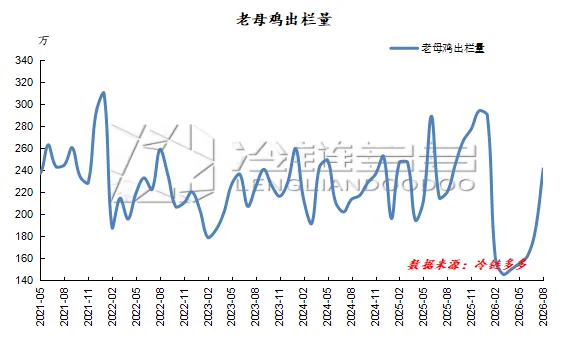
Driven by sustained substantial farming profits, farmers previously held a strong sentiment to delay culling, and the pace of old hen slaughter was noticeably slow. Only in recent days has culling begun to increase gradually, but the market's existing supply remains at an elevated level, and supply-side pressure is unlikely to ease effectively in the short term.
3. Egg Demand Analysis
This week, the egg industry showed excessive signs of a weak peak season. Back-to-school stocking has ended, concentrated procurement demand has faded, and the pace of end-market shipments has slowed, presenting a rather lackluster performance. Trade links lack confidence in the market outlook, procurement has become cautious, and most maintain only essential purchases. In some areas, inventory has begun to show slight accumulation.
4. Egg Market Outlook
On the supply side, the current supply shows a dual characteristic of "high newly opened production and accelerating old hen culling," but the two offset each other to some extent. Egg prices and culling hen prices have weakened simultaneously, exacerbating bearish market expectations. The farming sector's willingness to cull old hens has noticeably increased, and rising slaughter volumes have a contracting effect on short-term supply. On the other hand, the transmission of earlier chick restocking volumes means the number of newly opened layers remains high, and supply of medium and small-grade eggs continues to be abundant, constituting the main incremental pressure on the supply side. Fortunately, festival demand provides some support for medium and small-grade egg shipments, and periodic digestion is acceptable.
On the demand side, overall performance lacks bright spots and support is weakening. After the school season began, tourism and catering consumption returned to normal levels, and the incremental demand from the earlier peak season has narrowed significantly. Secondly, food processing enterprises, constrained by their own product sales, have entered the final stage of Mid-Autumn peak season production, and raw material procurement volumes are gradually declining. Trade links remain cautious, with all links primarily making small replenishment purchases and low procurement enthusiasm. As the Mid-Autumn Festival approaches, the end market may see bargain-hunting stocking demand, especially for premium eggs, which could provide some bottom support, but the boost is expected to be limited.
Overall, both supply and demand are weakening, but old hen culling offsets part of the supply increase, and inventory pressure is manageable. The demand side lacks strong bullish factors, with only Mid-Autumn premium egg stocking providing periodic support. Egg prices are expected to remain stable to weak with range-bound consolidation, with limited upside or downside. The adjustment range is expected to be around 0.20 CNY/jin, with the average price in major producing regions at 4.75-4.85 CNY/jin.